
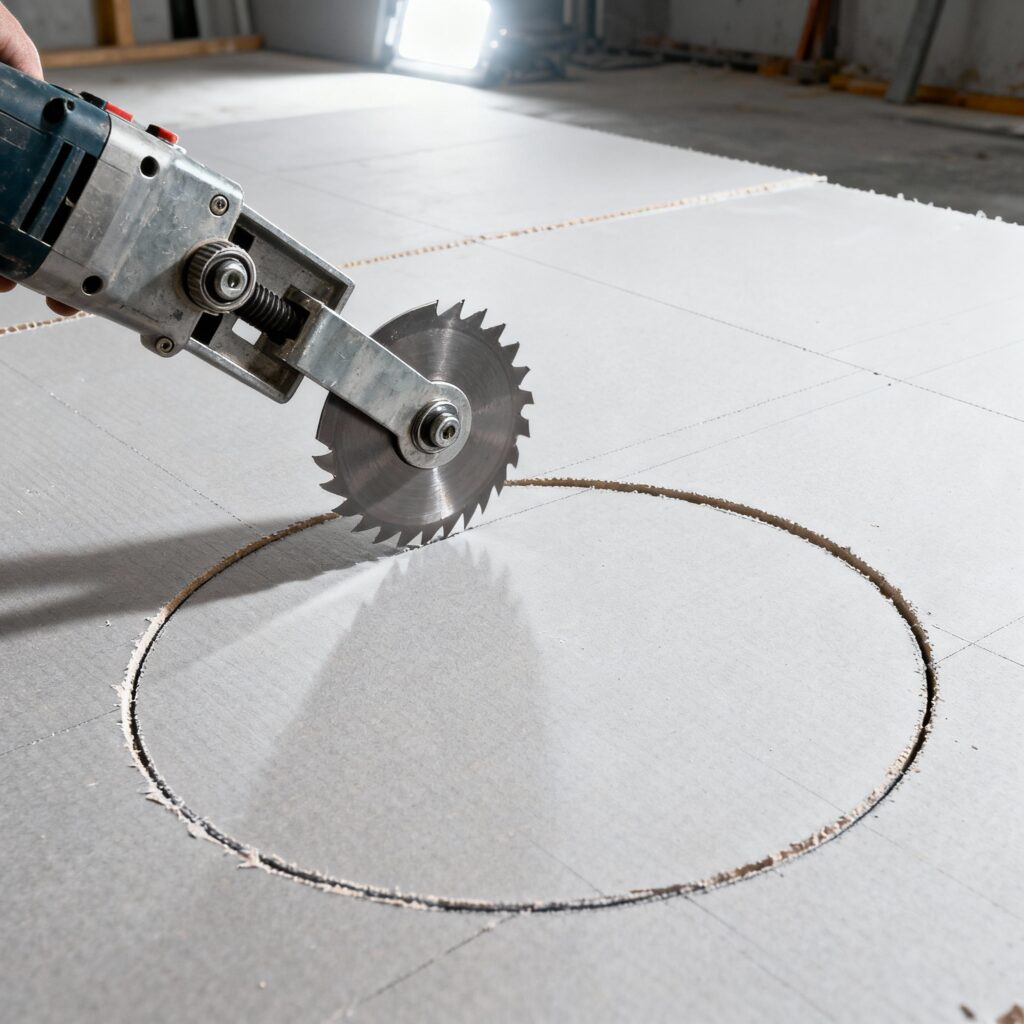
Cutting perfect circles in drywall is one of those tasks that looks simple but can quickly become frustrating without the right tool. Whether you’re installing recessed lighting, ceiling speakers, or pipe openings, precision is everything. That’s where a drywall circle cutter comes in. This specialized tool makes clean, accurate cuts with minimal effort, helping homeowners and contractors save both time and materials.
Here’s a practical guide to help you understand how to choose the right drywall circle cutter and use it effectively in your projects.
Why Use a Drywall Circle Cutter?
Trying to cut a circle with a utility knife or saw often leads to uneven edges, wasted drywall, or oversized holes. A circle cutter offers clear advantages:
- Accuracy – Ensures consistent, perfect circles every time.
- Speed – Cuts faster than manual measuring and tracing.
- Less Waste – Reduces the risk of ruining panels with mistakes.
- Professional Results – Leaves smooth edges that make finishing easier.
For clients looking for efficiency and quality, this tool pays off almost immediately.
Types of Drywall Circle Cutters
Circle cutters come in different designs, each suited for specific needs. Here are the most common options:
- Compass-Style Circle Cutters
- Works like a drawing compass, with a central pivot point and a cutting blade that rotates around it.
- Best for smaller circles (light fixtures, pipes).
- Affordable and simple to use.
- Works like a drawing compass, with a central pivot point and a cutting blade that rotates around it.
- Adjustable Rotary Cutters
- Feature adjustable arms that set the radius of the circle.
- Suitable for medium to large openings.
- Good balance of versatility and ease.
- Feature adjustable arms that set the radius of the circle.
- Hole Saw Attachments
- Power tool attachment that cuts perfect circular holes.
- Ideal for repetitive, identical cuts (e.g., recessed lights).
- Requires a drill and can handle tough materials.
- Power tool attachment that cuts perfect circular holes.
- Professional Circle Cutter Kits
- Heavy-duty tools designed for contractors.
- Often include multiple blade sizes and guides.
- Best for large-scale projects or commercial drywall work.
- Heavy-duty tools designed for contractors.
How to Choose the Right Circle Cutter
When selecting a drywall circle cutter, consider these factors:
- Project Needs – For occasional small projects, a compass-style cutter is enough. For frequent or professional use, invest in an adjustable or power tool attachment.
- Hole Size Range – Make sure the cutter can handle the diameter you need.
- Ease of Use – Some cutters are manual, while others attach to drills for quicker results.
- Durability – Look for strong materials like steel or carbide blades.
- Budget – Basic models are inexpensive, but higher-end cutters save more time on bigger projects.
Step-by-Step: How to Use a Drywall Circle Cutter
- Mark the Center Point – Identify the center of the circle where you need the opening.
- Set the Cutter – Adjust the tool to the correct radius or diameter.
- Score the Drywall – Rotate the cutter to score a clean circle outline.
- Cut Through – Depending on the tool, either snap the scored section or drill through.
- Finish the Edges – Smooth out rough areas with a rasp or sandpaper.
- Test the Fit – Check that your fixture (light, pipe, vent) fits securely.
This simple process makes installation easier and prevents costly mistakes.
Safety Tips When Cutting Drywall
- Always wear safety glasses to protect against dust and debris.
- Use a dust mask, especially when cutting multiple holes.
- Keep fingers clear of the blade or drill.
- Work on a stable surface to prevent slipping.
Benefits for Clients
Why should homeowners and clients specifically care about drywall circle cutters?
- Time Savings – Projects like installing recessed lights take a fraction of the time.
- Professional Quality – Even DIYers can achieve contractor-level results.
- Cost Efficiency – Fewer mistakes mean less wasted drywall and fewer repairs.
- Versatility – One tool can handle multiple projects, from plumbing to electrical installations.
Conclusion
A drywall circle cutter is one of the simplest but most effective tools for achieving clean, precise results in any drywall project. By choosing the right type of cutter and using it properly, clients can save time, reduce waste, and enjoy a professional-looking finish.
Whether you’re handling a single room renovation or a larger remodel, investing in a drywall circle cutter ensures your work is faster, safer, and far more efficient.